


Singapore: Leading the Global Shipping Green Revolution, Electric Ships Ushering in a Zero-Carbon Future
2026-01-16


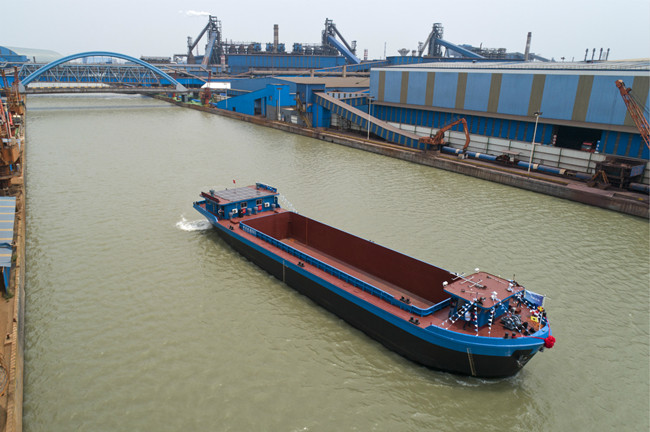
At the confluence of the Malacca Strait and the Singapore Strait, where the waters are a deep blue, an international shipping hub renowned as the "Garden City" is vigorously spearheading a green revolution. As the world's busiest entrepôt port and ship bunkering center, Singapore, with its 2050 net-zero emissions target as an anchor point, has taken the lead in introducing the world's most stringent shipping decarbonization policies: Starting from 2030, all newly-built port vessels must be fully electric or powered by net-zero emission fuels such as biofuels and hydrogen. This move not only reshapes the rules of the game in the global shipping industry but also positions Singapore as a "testing ground" and "bellwether" for global electric ship technology.
Policy-Driven Transformation: From "Fuel Oil Dominator" to "Green Pioneer"
Singapore's shipping industry contributes 7% of the country's GDP, yet traditional fuel-powered ships account for 3% of global shipping industry's greenhouse gas emissions annually. Faced with the urgency of the climate crisis, the Singaporean government has demonstrated a resolute determination to drive transformation:
2030 Milestone
Around 1,600 port vessels are required to undergo electrification retrofits or fuel substitution by 2030, with the goal of achieving full net-zero emissions by 2050.
Economic Leverage
The Maritime and Port Authority (MPA) has established a S$300 million dedicated fund to support green technology R&D and international shipping fuel innovation. Ships using low-carbon fuels are eligible for reductions in registration fees, tonnage taxes, and port fees, with a maximum discount of up to 100%.
Infrastructure First
A master plan for an electric ship charging network will be formulated by 2025. Energy giants like Shell have already built the first ship charging station on Pulau Bukom, providing "plug-and-charge" services for all-electric tugs and cargo ships.
This series of policies, acting like a "combination punch," is accelerating Singapore's transformation from the world's largest ship fuel bunkering center into an incubator for green shipping technologies.
Technological Breakthroughs: The Leap from "Concept" to "Reality" for Electric Ships
On Singapore's azure waters, a silent "arms race" for electric ships has already begun:
All-Electric Cargo Ship "Hydromover"
Launched in 2023, it is Singapore's first all-electric cargo ship. Equipped with replaceable high-density batteries, it has a half-load range of 40 nautical miles and reduces operating costs by 50% compared to traditional fuel-powered ships. Its twin-hull aluminum structure and solar panel design make zero emissions a reality.
50-Ton All-Electric Tug "PXO-ACE-1"
Jointly built by PaxOcean Group and ABB, it adopts an integrated electric propulsion system with a rated pulling force of 50 tons and is expected to be commissioned in April 2026. This tug not only marks a milestone in Singapore's electrification but is also regarded as a "demonstration model" for Asia's shipping electrification.
Biofuel Blending Solution
Shipping giants like Pacific International Lines (PIL) have piloted the blending of 24% fatty acid methyl esters with very low sulfur fuel oil for routes between Singapore and Qinzhou Port in China, providing a transitional solution for traditional ship emissions reduction.
From battery replacement technology to hydrogen fuel cell R&D, from digital twin simulations to fluid dynamics optimization, Singapore is adopting an "industry-academia-research-application" integrated model to overcome the three major challenges of electric ships: range, safety, and cost.
Market Response: Global Capital and Industry Giants' "Green Bets"
Singapore's green shipping initiative is attracting a steady stream of global capital and industry giants:
Maersk Group
In 2023, Maersk completed the world's first ship-to-ship methanol bunkering in Singapore, supplying clean fuel for methanol-powered container ships and marking the maturity of the zero-carbon fuel supply chain.
Collaboration with China Classification Society (CCS)
The MPA signed a memorandum of understanding with CCS to jointly explore zero-emission marine fuels and battery technologies and promote the construction of a Sino-Singapore green digital shipping corridor.
DP World
In collaboration with PIL, DP World is piloting the supply of hybrid biofuels and testing renewable energy-powered container handling equipment on routes between Jebel Ali Port and Asia.
According to statistics, Singapore's bio-blend fuel sales surged by 68.54% year-on-year in 2024, while LNG sales skyrocketed by 318.39%, indicating exponential growth in demand for clean fuels. Although the Red Sea crisis has temporarily boosted traditional fuel sales, in the long run, the global shipping industry's thirst for zero-carbon solutions is irreversible.
Future Vision: From "Port Revolution" to "Global Paradigm" Leadership
Singapore's green shipping revolution is by no means an isolated event but a microcosm of global climate governance. Its policy innovations and technological breakthroughs offer three key insights for the global shipping industry:
Policy as Market
By combining economic incentives with mandatory standards, governments can rapidly guide industrial transformation and avoid "market failures."
Infrastructure Determines Success or Failure
The early deployment of infrastructure such as charging networks and fuel bunkering stations is a critical prerequisite for the popularization of electric ships.
Open Collaboration Breaks Down Barriers
Models such as the Sino-Singapore green digital shipping corridor and joint R&D by international giants demonstrate that cross-regional and cross-industry collaboration is the only way to overcome technological challenges.
While the global shipping industry still hesitates between "emissions reduction" and "cost," Singapore has redefined the essence of an international shipping hub with "zero-carbon future" as its coordinate. Here, it is not just a port for ships but a testing ground for green technologies, a hub for global capital, and a model for harmonious coexistence between humanity and the oceans.
By 2030, when the last fuel-powered port vessel exits the stage of history in Singapore Bay, it will be replaced by a "green fleet" consisting of electric tugs, biofuel-powered cargo ships, and hydrogen-powered passenger liners. Silently gliding across the azure waters, they will inscribe a new chapter in human shipping history with their zero-emission trajectories.

Contact Us
Email:
13813981680@139.com
Tel:
+86-17602544555
Address:
Building T1, Tianjijiang Lai-T1, Pukou District, Nanjing City