


Challenges and Breakthrough Strategies for Singapore's Electric Vessels
2026-03-17


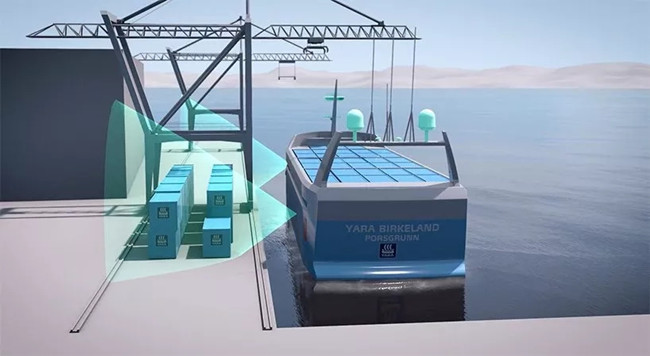
As the global shipping industry accelerates its green transition, Singapore has emerged as a pioneer in electric vessel adoption, leveraging its forward-looking policies and robust maritime ecosystem. Yet, amid the sight of Hydromover 2.0—a fully electric cargo vessel—navigating Singapore’s bustling straits to deliver zero-emission supplies to anchored ships, a critical undercurrent of concern is rising: the persistent issues of battery safety and range limitations threaten to undermine the sector’s growth. This clash between technological innovation and industrial reality not only tests the commercial viability of electric vessels but also provides a vital case study for global maritime decarbonization.
Battery Safety: From Lab Tests to Real-World Maritime Trials
The heart of electric vessels lies in their power systems, yet lithium-ion batteries face existential risks in harsh maritime environments. The 2019 explosion of Norway’s MF Ytteroyningen passenger ferry exposed the catastrophic potential of ternary lithium batteries, which release oxygen and flammable gases when damaged. Similarly, the 2021 fire aboard Norway’s MS Brim tourist vessel led to the establishment of a 300-meter safety zone, underscoring the chain reaction hazards of thermal runaway.
Singapore’s electric vessels operate in extreme conditions—high humidity, salt spray, and constant vessel motion. Hydromover 2.0, for instance, uses box-style power sources that, while certified by classification societies, face heightened risks of collision during loading/unloading and frequent charging/battery swaps. A single failure could trigger not just vessel loss but also port infrastructure damage, supply chain disruptions, and irreversible erosion of public trust in electric maritime technology.
Range Anxiety: Bridging the Energy Gap from Rivers to Oceans
Range limitations remain the Achilles’ heel of electric vessel commercialization. Most current models are confined to inland waterways and coastal areas. Singapore’s first fully electric cargo ship, Hydromover 1.0, offered just 6–8 hours of continuous operation, while its successor, Hydromover 2.0, tripled this range but still relies on a “fast-charging + high-frequency battery swapping” model. This approach works for port operation vessels but falls short for ocean-going freighters requiring weeks of autonomy.
The core bottleneck lies in battery energy density. Hydromover 2.0’s 914.536 kWh battery pack—equivalent to 150 electric vehicles—would require impractical volume and weight to power a 10,000-ton cargo ship across oceans. Moreover, lithium-ion batteries last only 5–8 years, while vessels endure 30+ years, making repeated replacements economically untenable. This “high upfront cost + long-term maintenance” dilemma deters many shipowners from electrification.
Industry Disruption: A Chain Reaction from Technology to Ecosystem
Battery and range challenges are triggering systemic shocks across the electric vessel value chain. Insurers are adopting cautious stances; China Re Property & Casualty notes that electric vessels’ risks are “highly differentiated and uncertain,” leading to soaring premiums or restrictive terms that further inflate operational costs. Port infrastructure also faces pressure: while Singapore has launched pilot charging stations for electric port craft, scaling fast-charging networks, deploying swap stations, and establishing battery recycling systems demand massive investment—far exceeding current market demand.
The talent and technological gaps compound the crisis. Operating electric vessels requires hybrid expertise in electrical engineering, marine environments, and cybersecurity, yet global talent pools remain critically shallow. Meanwhile, integrating battery management systems (BMS) with ship controls and defending against cyberattacks pose智能化 (intelligent) challenges that traditional shipyards struggle to address.
Pathways Forward: Policy, Technology, and Ecosystem Synergy
Singapore is countering these headwinds with a tripartite strategy of policy, innovation, and collaboration. By mandating that all new port vessels be fully electric or use net-zero fuels by 2030, the government is forcing industry-wide acceleration. Technologically, firms like EVE Energy are introducing solutions such as 3C high-rate marine lithium iron phosphate batteries and liquid-cooled packs, enhancing thermal stability and charging efficiency. Ecosystem-wise, Singapore has forged green shipping corridor agreements with Australia and China’s Shandong Province, sharing technical standards and operational expertise to reduce scaling barriers.
For example, Hydromover 2.0’s “electrification + digitization” model uses real-time analytics and route optimization to boost energy efficiency and minimize idle sailing, indirectly alleviating range pressures. Meanwhile, CSSC’s S-Drive frequency conversion system, certified for cybersecurity by Bureau Veritas, sets a benchmark for intelligent vessel safety. These cases demonstrate that breakthroughs depend not on isolated battery advancements but on cross-industry innovation.
Conclusion: Navigating Uncharted Waters
Singapore’s electric vessel journey mirrors global maritime decarbonization: a blend of ambition and adversity. Battery and range challenges, like storms at sea, test structural resilience while driving technological evolution. As Hydromover 2.0’s propellers churn Singapore’s waters, they carry not just cargo but humanity’s resolve to redefine sustainable shipping. Success demands humility in confronting risks, ingenuity in overcoming barriers, and collaboration to steer toward a zero-carbon horizon. Only by calibrating our course amid the waves can we ensure electric vessels sail beyond prototypes into the mainstream of global trade.
没有了!
Next

Contact Us
Email:
13813981680@139.com
Tel:
+86-17602544555
Address:
Building T1, Tianjijiang Lai-T1, Pukou District, Nanjing City