


Chao Yong Yangtze River: How can rechargeable and replaceable energy systems support the green future of electric cargo ships?
2025-09-02


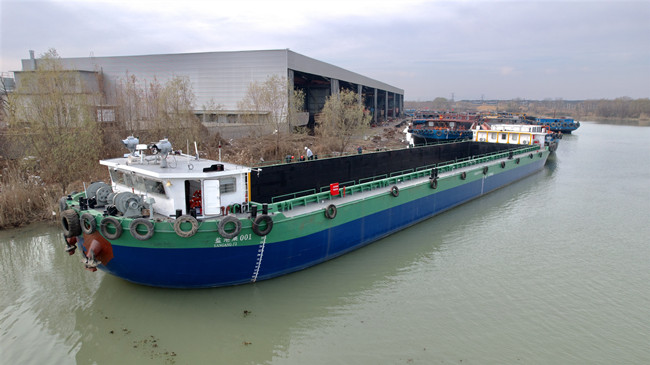
As the morning mist over the Yangtze River has not yet dissipated, a pure electric cargo ship quietly departs from Nanjing Port. It is devoid of the roar of a diesel engine, with only the soft hum of the electric motor harmonizing with the river’s waves. Each departure of this "green giant whale" is writing a low-carbon narrative for China’s inland river shipping—supported by the emerging rechargeable and replaceable energy system. As the "dual carbon" goals serve as the guiding light in the river’s breeze, the key question for the pure electric cargo ship industry to sail forward is how to build an efficient, intelligent, and sustainable energy network.
Chapter 1: The Struggles to Break Through—The "Energy Anxiety" of Electric Cargo Ships
Despite the significant advantages of pure electric cargo ships in zero emissions, low noise, and high energy efficiency, their development still faces three major obstacles:
Limited Range: Current battery energy density is only 1/40th that of diesel, requiring frequent recharging for long-haul transport.
Underdeveloped Infrastructure: The Yangtze River mainline has only 12 dedicated charging stations, and battery-swapping stations are even fewer.
Fragmented Standards: Battery capacities range from 500 kWh to 2000 kWh, making the battery-swapping mode incompatible across different ship types.
These pain points are like hidden reefs in the river, testing the industry’s wisdom and resilience.
Chapter 2: System Reconstruction—The "Dual-Track Drive" of Rechargeable and Replaceable Energy
Charging Network: Weaving the "Green Arteries" of Rivers
At Wuhan Yangluo Port, the world’s first "wind-solar-storage-charging" integrated floating charging station has been put into operation. Solar panels and small wind turbines on a floating platform form a microgrid, storing energy during the day and discharging it at night. The station can supply energy to 20 cargo ships simultaneously. A notable feature is the "shore-to-ship" reverse charging technology: when the cargo ship docks, surplus electricity can be fed back into the port’s power grid, creating a dynamic balance of energy ecology.
Battery-Swapping Mode: Creating the "Energy Rest Stops" for Ships
At the battery-swapping station in Chongqing’s Guoyuan Port, mechanical arms are performing battery swaps with millimeter-level precision. This system, inspired by the battery-swapping experience in the electric vehicle industry, automatically adjusts the platform height according to the ship's draft, enabling a 1,500 kWh battery to be swapped in just 3 minutes. More importantly, through a battery bank model, ship owners do not have to bear the cost of battery assets, paying only for usage, significantly lowering initial investment.
Chapter 3: Empowering Innovation—The Synergistic Evolution of Technology, Policy, and Models
Technological Breakthroughs: Making Batteries Smarter
CATL has developed a marine solid-state battery, certified by the China Classification Society, with an energy density surpassing 400 Wh/kg and a cycle life exceeding 3,000 cycles. Combined with an intelligent thermal management system, it can maintain 85% discharge efficiency even in extreme cold environments of -20°C. A more forward-thinking development is Huawei Marine’s "Onboard Energy Router," which can dynamically allocate energy from photovoltaic, storage, and shore power sources in real-time, optimizing energy costs.
Policy Support: From Pilot Projects to Standards
The Ministry of Transport’s "Inland Waterway Shipping Development Outline" clearly states that by 2030, electric cargo ships will account for over 30% of the Yangtze River mainline fleet, with dedicated charging facilities covering all major ports. Even more promising is the development of a unified national market for battery standards—through the formulation of specifications such as the "Ship Battery Box Size Standard" and "Battery-Swapping Interface Technical Requirements," enabling seamless compatibility between devices from different manufacturers.
Model Innovation: From Individual Ships to Ecosystem
In Wuhu, Anhui Province, a shipping company is piloting a "battery-sharing" plan: 10 small and medium-sized shipowners jointly own 200 standard batteries, which are dynamically allocated through an intelligent scheduling system, reducing the annual operational costs per ship by 18%. A more ambitious attempt comes from China Merchants Group, which has created a "Green Shipping Alliance" linking battery manufacturers, port operators, and financial institutions, forming a full-chain closed-loop of "R&D—Manufacturing—Operations—Recycling."
Chapter 4: Future Vision—When Energy Networks Become the New Infrastructure of Shipping
Imagine the year 2030, when the Yangtze River will look like this:
AI-powered Charging Routes: As cargo ships enter Nanjing Port, onboard AI will automatically plan energy replenishment routes—first to a floating charging station for a quick 30% charge, then to a battery-swapping station for a low-charge battery replacement.
Autonomous Electric Ship Fleets: Between Wuhan and Yichang, unmanned electric cargo ships will form fleets, sharing surplus energy through V2V (vehicle-to-vehicle) technology.
Integration with Hydropower: The battery-swapping station at Chongqing’s Guoyuan Port will work in conjunction with the Three Gorges Dam, using low-priced hydropower during peak electricity production to store battery energy, realizing integrated scheduling of "water-solar storage."
Epilogue: Building the Green Poem of Rivers
From the dawn at Nanjing Port to the lights of the Chongqing mountains, the rechargeable and replaceable energy system is injecting powerful momentum into electric cargo ships. This is not only an iteration of technology but also an upgrade of development philosophy—when every kilowatt of energy comes from renewable sources, and every battery swap becomes an efficient configuration of resources, we will ultimately witness that the green transformation of inland waterway shipping is not just about one ship’s emissions, but about the ecosystem of a river, the commitment of a nation, and humanity’s ultimate responsibility to the blue planet.
As the tides rise on the Yangtze River, the future has arrived. Let us, with the pen of the energy system, paint the green journey of electric cargo ships!
Previous
没有了!

Contact Us
Email:
13813981680@139.com
Tel:
+86-17602544555
Address:
Building T1, Tianjijiang Lai-T1, Pukou District, Nanjing City