


Analysis of the Current Situation of the Electric Ship Industry in 2026: Huge Development Potential for Various Ship Types
2025-12-23


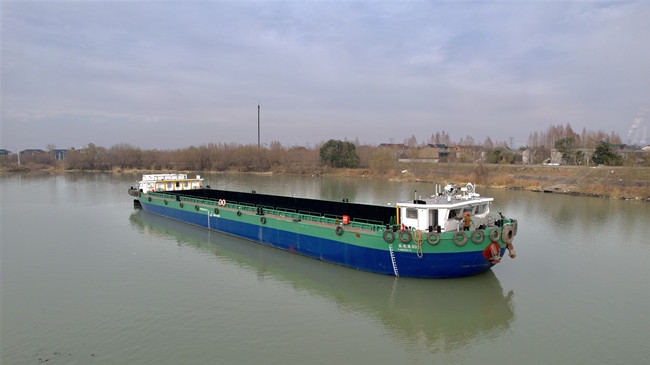
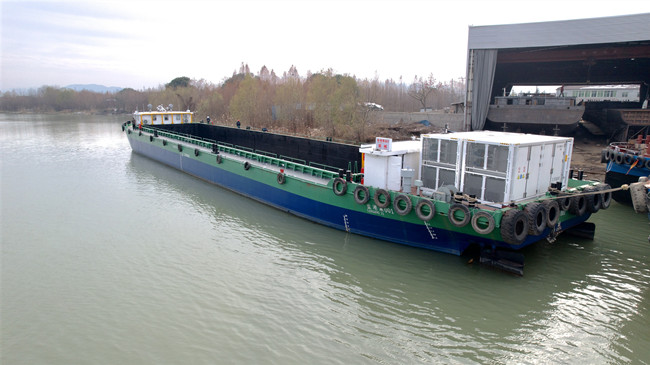
In the context of the global active pursuit of green development concepts and full-scale promotion of the "dual carbon" goals, the electric ship industry has ushered in unprecedented development opportunities. In recent years, benefiting from the spillover effects of the electric vehicle industry, electric ships have developed rapidly and become a key force in the green transformation of the shipping sector. They offer significant advantages in reducing carbon emissions and noise pollution, not only meeting current environmental protection needs but also injecting new impetus into the sustainable development of the shipping industry. Nowadays, with continuous technological innovations and expanding application scenarios, electric ships are emerging in the global shipping market and gradually reshaping the traditional shipping landscape.
I. Overview of Electric Ship Development: Scale Expansion and Technological Innovation
According to the "2025 - 2030 China Electric Ship Market Special Research and Market Outlook Forecast Assessment Report," as of early 2024, China has achieved remarkable results in the development of electric ships, with over 440 pure battery-powered ships built or under construction. In terms of power types, pure battery-powered ships dominate, with 440 vessels, while there are 63 hybrid-powered ships. Regarding ship types, passenger ships account for the largest number, reaching 437, and cargo ships and other types total 66. In terms of ship length, 274 are under 20 meters, and 229 are over 20 meters. In terms of navigation areas, inland waterways are the main focus, with 479 inland ships and 24 coastal ships. Regarding charging and battery-swapping methods, charging is the primary energy replenishment mode, with 490 ships using charging, while only 13 are battery-swapping ships, although the battery-swapping mode is in the pilot construction stage.
The power system of electric ships is their core technology. Unlike inland diesel-powered ships, electric ships are driven by electric energy. The electric energy provided by the battery system is transmitted to the propulsion motor through the power distribution system, which then drives the propeller to operate. At the same time, the power distribution system also supplies power for the ship's daily electricity consumption. The battery management system continuously monitors the battery's temperature, charge level, and other statuses. Due to differences in the transportation needs, power storage capacity, and battery system layout of different ship types, during the construction of electric ships, battery, motor, and electric control manufacturers need to enter the shipyard to conduct joint debugging and testing of the equipment to ensure the ship's reliability. During navigation, electric ships must fully consider factors such as power consumption speed in different navigation scenarios, ship maneuvering methods, as well as the safety of charging and battery-swapping operations, charging duration, and personnel emergency response capabilities.
In terms of charging and battery-swapping facility construction, currently, electric ships generally adopt a one-ship-one-pile (supporting method, here meaning one charging pile per ship). Since most existing electric ships are passenger ships with fixed routes and berthing piers, the charging locations and charging piles are also relatively fixed. Battery-swapping electric ships started relatively late, and battery-swapping stations are still in the pilot construction stage. Several ports, including Shanghai Port and Nanjing Port, have each built one battery-swapping station.
II. Analysis of Electric Ship Technology and Applications: Advantages Stand Out, and Prospects Are Broad
(1) Technology Comparison: Mutual Learning with Electric Heavy Trucks and Leading Box-type Power Supply Technology
Electric cargo ships and electric heavy trucks share similar technical characteristics. Electric heavy trucks are divided into two types: cargo vehicles and traction vehicles + trailers, with a maximum authorized total mass of more than 14 tons, mainly used for short- and medium-distance freight transportation. In 2023, China's electric heavy truck sales reached 30,500 units, a 48% increase from 2022, with a penetration rate of 4.6%. The battery-swapping mode of electric heavy trucks is suitable for continuous operation scenarios such as ports and steel mills, while the charging mode is suitable for transportation scenarios with lower usage frequencies. This provides references for the operation modes of electric cargo ships.
The application of box-type power supply technology in electric ships is becoming increasingly widespread. It is generally arranged at the stern of electric ships and undergoes battery-swapping and hoisting at the berth. China is at the international forefront in box-type power supply technology, with companies from the COSCO Group, CSSC Group, and private technology enterprises actively participating in research and development. The box-type power supply connectors developed in China not only meet energy industry standards but also feature diverse integration methods for power supply and communication functions. Although foreign countries began exploring box-type power supply technology 2 - 3 years earlier than China, they lag behind in terms of technological research and development speed and application promotion level.
China's electric ships perform well in key technology areas such as power batteries, battery management, electric propulsion, and box-type power supplies. Among the world's top ten power battery manufacturers, six are Chinese companies, and some have obtained ship classification society certifications for marine products. In terms of battery management, multiple shipbuilders have research and development capabilities and have obtained ship classification society certifications. Regarding electric propulsion systems, Chinese shipbuilders can conduct independent research and development and provide turnkey solutions. Through market-oriented participation, box-type power supply technology has achieved technological iteration upgrades and large-scale promotion.
(2) Suitable Ship Types: Huge Development Potential for Various Ship Types
Electric passenger ships have mature technology, providing passengers with a quiet, comfortable, and stable travel experience. Their rich application scenarios facilitate the practice of integrating transportation and tourism, making them highly popular among passengers. With fixed routes and well-established charging facilities, they can meet the demands of inland water passenger transportation and are a key development ship type for the electrification of inland ships.
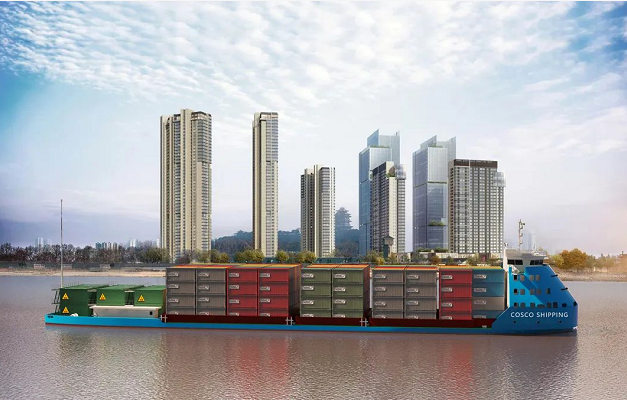
Inland electric container ships have broad development prospects. With the optimization of the transportation structure, the construction of a comprehensive three-dimensional transportation network, and the promotion of bulk-to-container and rail-water intermodal transportation, the volume of container transportation continues to grow, and the number of electric container ships will also steadily increase. They can utilize container terminals or dedicated battery-swapping facilities for battery swapping, improving operational efficiency. Coupled with the application of relevant business models and cost reductions, electric container ships are expected to become the main ship type of electric cargo ships.
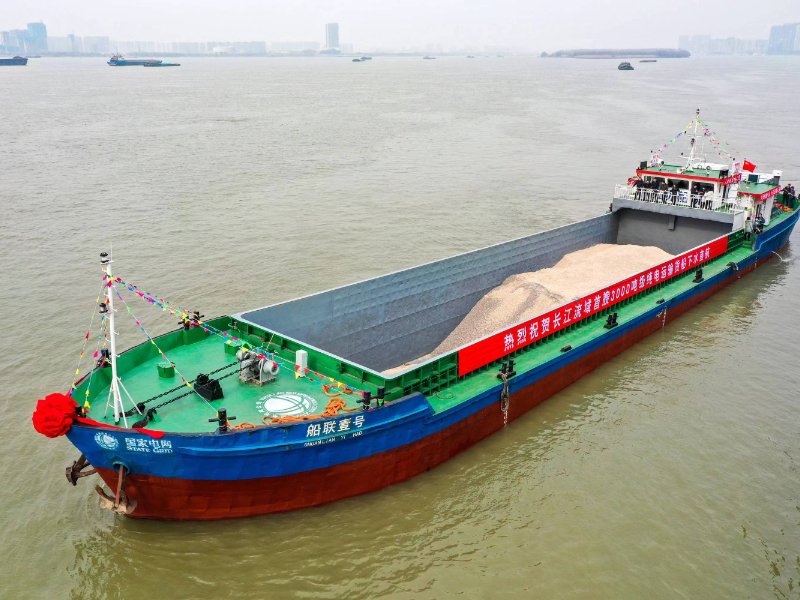
The development of electric bulk carriers is optimistic. China has a large number of inland bulk carriers, but due to limitations in cabin layout and transmission systems, electrification retrofitting is difficult, and most are newly built. With the improvement of charging and battery-swapping facilities, technological progress, and the maturation of business models, the investment costs of electric bulk carriers will decrease, and operational revenues will increase, leading to an expansion in their number and scale.
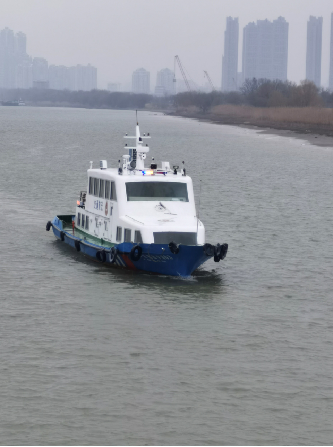
Public service ships are suitable for electrification upgrades. Public service ships have diverse ship types but a relatively small number, and they operate in fixed areas. Drawing on the development experience of electric vehicles, their electrification upgrades can be carried out by reasonably configuring power storage capacity and charging frequencies according to usage needs.
(3) Application Scenarios: Continuous Expansion, Covering Diverse Fields
With the large-scale and full-chain development of electric ships, their application scenarios continue to expand. In the field of passenger ships, they cover river tours, lake and reservoir area tours, short-distance sightseeing tours, and medium- and long-distance sightseeing tours. For container ships, application scenarios include short- and medium-distance small container capacity, medium- and long-distance small container capacity, and medium- and long-distance medium and large container capacity transportation. Scenarios for bulk carriers include short- and medium-distance small cargo capacity, medium- and long-distance small cargo capacity, and medium- and long-distance medium and large cargo capacity. Public service ships are mainly used in work-related and service scenarios.
III. Development Strategies for Electric Ships: Multiple Parties Work Together for Common Progress
(1) Strengthen Safety and Emergency Management
Water transportation enterprises should earnestly fulfill their safety production responsibilities, establish and improve a long-term safety management mechanism, and enhance emergency rescue and disposal capabilities. Clarify the main responsibilities of all parties, including electric ship owners, operators, power battery enterprises, and system integrators, in operation and emergency safety management. Formulate and improve accident emergency plans, covering aspects such as emergency prevention and early warning mechanisms, emergency disposal procedures, and support measures. In view of the characteristics of electric ship operation accidents, strengthen the construction of emergency capabilities such as early warning and alarming, ship towing, personnel evacuation, and fire disposal, and intensify personnel training and emergency drills.
(2) Lead Ship-Shore-Power Connection with Standards
Relevant departments should accelerate the formulation of standards for electric ships, especially key standards for ship-shore-power connection. Unify standards for software and hardware connection, including communication protocols and connectors. Standardize product and testing standards for shipboard power battery systems and box-type power supplies to improve equipment reliability and safety. Formulate standards for the construction and safe operation of码头 (pier) charging and battery-swapping facilities and establish a standard system covering the entire chain of electric ship and charging and battery-swapping facility construction, operation, operation, and inspection and testing.
(3) Strengthen Core Technology Research and Development
Electric ship manufacturers and research institutions should fully leverage their technological advantages and strengthen the integrated research and development of key systems such as power batteries, battery management systems, DC integrated power systems, fire safety systems, and life-saving systems, as well as new ship types. Accelerate the research and development of core technologies such as ultra-high-power fast charging and battery swapping, high-energy-density and high-safety-performance power batteries, and lightweight and compact battery modules. Improve the pilot-scale production capabilities of electric ships,完善 (improve) the pilot-scale production technology system and service network, conduct in-depth research on safety risk prevention technologies, promote the transformation of technological achievements, and enhance the reliability and safety of key equipment.
(4) Improve Management Systems
Shipping enterprises should fulfill their main responsibilities for crew management. Based on the operation and technological characteristics of electric ships, organize crew training and, with the technical support of electric system equipment manufacturers, improve crew operational skills and emergency handling capabilities. Before the pilot operation of electric ships, the pilot units should entrust a third-party organization to conduct safety risk assessments. Relevant competent departments and management agencies should strengthen guidance in accordance with their responsibilities, and maritime management agencies should study crew competency standards and include electric ship crews in the scope of mandatory special training.
(5) Make Good Use of Supporting Policies and Funds
Fully utilize existing fiscal funds to promote the research, application, industrialization, and large-scale development of electric ships. Implement China's policies on the scrapping and updating of old ships and the development of new energy-powered ships, make good use of equipment update subsidy funds, and reduce the initial construction investment pressure on ship owners. Give full play to the role of industry-finance cooperation platforms, utilize green finance policies, and encourage financial institutions to provide multiple financing methods to reduce the comprehensive financing costs of the electric ship industry chain. Implement the preferential policy of exempting capacity electricity fees for the electricity consumption of charging and battery-swapping facilities at the large industrial electricity price.
In conclusion, China's electric ship industry is showing a vigorous development trend in 2026. From the development overview, significant progress has been made in terms of the number of ships, technological level, and the construction of charging and battery-swapping facilities. In terms of technology and applications, electric ships have demonstrated unique advantages, with huge development potential for various ship types and continuously expanding application scenarios. At the same time, to promote the sustained and healthy development of the electric ship industry, effective measures have been taken in multiple aspects, including safety management, standard formulation, technological innovation, system improvement, and policy and financial support. In the future, electric ships will play a greater role in the field of green shipping and help China and even the global shipping industry achieve sustainable development goals.

Contact Us
Email:
13813981680@139.com
Tel:
+86-17602544555
Address:
Building T1, Tianjijiang Lai-T1, Pukou District, Nanjing City