


Thousand ton electric cargo ship sets sail, writing a new chapter in green shipping
2025-08-12


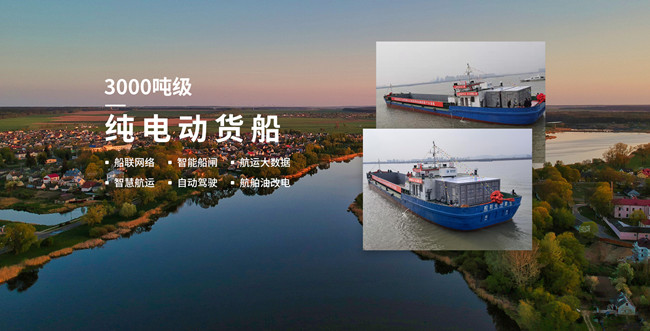
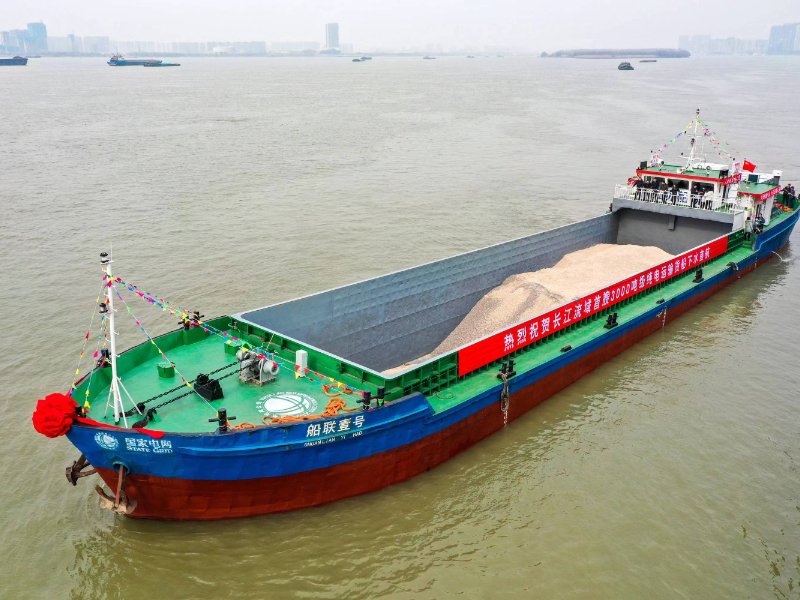
When the first 1,000-ton electric cargo ship of the Yangtze River set sail, a silent yet profound shipping revolution began to unfold across Jiangsu Province. The "Ship Union No. 1," powered solely by electricity, not only set a new record for inland electric cargo ships with a 3,000-ton capacity but also became a vivid embodiment of the "ecological priority and green development" concept of the Yangtze River Economic Belt, with its zero emissions and low noise.
I. Technological Breakthrough: From "Diesel Roar" to "Silent Zero Carbon"
Beneath the deck of "Ship Union No. 1," two sets of movable lithium iron phosphate battery packs rest quietly. With an energy storage capacity of 2,200 kWh, equivalent to the total battery capacity of more than 30 new energy vehicles, this electric cargo ship, converted from a traditional fuel-powered vessel, replaced its diesel engine system with a fully electric propulsion system. This transformation achieved a breakthrough with more than 90% of the core technologies being domestically produced. With just 3 hours of charging, it can travel 120 kilometers—behind these numbers lie world-class technological challenges in DC microgrid control and battery safety management, which were overcome through the joint efforts of State Grid Jiangsu Electric Power and Jiangsu Ship Union.
What’s even more remarkable is the economic viability of the electric cargo ship. Originally, the fuel cost of the ship was about 2.2 million RMB per year, but after conversion, the annual electricity cost is only 900,000 RMB, a reduction of 60%. Moreover, its annual reduction of 2,918 tons of CO₂ emissions is equivalent to planting 160,000 trees or retiring 2,035 fuel-powered vehicles. This "cost reduction + carbon reduction" dual advantage is driving the transformation of Jiangsu's 45,000 traditional vessels from oil to electricity.
II. Policy Empowerment: Jiangsu’s "Solution" for a Trillion-Yuan Market
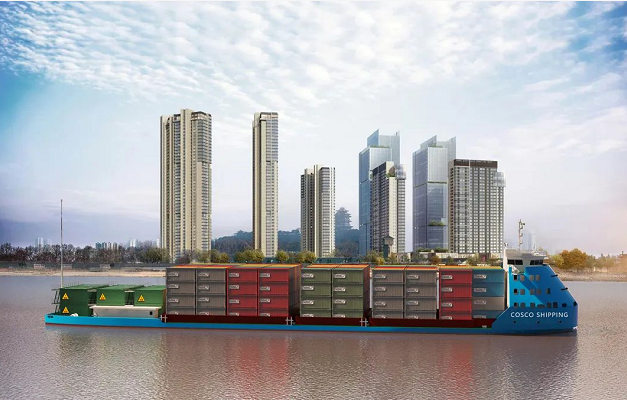
The Jiangsu Provincial Government's "Opinions on Accelerating the Creation of 'Water Transport Jiangsu'" outlines the goal of achieving large-scale application of inland pure electric vessels by 2025. Under this top-level design, Jiangsu Ship Union, in collaboration with State Grid Jiangsu Electric Power, Nanjing University of Science and Technology, and other institutions, has built a full-chain innovation system integrating "industry, academia, research, and application." The first electric vessel comprehensive test base in the country was established in Jiangxinzhou, Nanjing, where a series of electric ship standards were formulated. A 120-TEU pure electric container ship was piloted on the Beijing-Hangzhou Grand Canal, creating a "zero-carbon shipping route," while on the Yangtze River mainline, a 700-TEU electric container ship with a 50,000 kWh battery capacity was launched to enable "battery swapping" for long-distance transportation.
The synergy between policy dividends and market demand has given rise to trillion-yuan industry opportunities. According to estimates, the promotion of electric cargo ships in the Beijing-Hangzhou Grand Canal area alone could drive a 100-billion-yuan industrial chain in ship design, construction, equipment, and more, with annual fuel cost savings exceeding 3 billion RMB. Additionally, the 3,036 shore power facilities already built in Jiangsu are providing an "instant stop and charge" energy network for electric cargo ships, with shore power consumption reaching 30.66 million kWh in 2022, reducing CO₂ emissions by 30,660 tons.
III. Industry Transformation: From "One Ship Leading the Way" to "Thousands of Ships Competing"
The maiden voyage of "Ship Union No. 1" is not the end but the beginning of a green shipping ecosystem. In Jiangsu, a full industrial chain transformation is underway, covering "design, construction, and operation":
Shipyard Transformation: Traditional shipbuilding enterprises are adopting modular design and mass-producing standard electric ship hulls to reduce retrofit costs.
Energy Revolution: Breakthroughs in technologies such as mobile battery-swapping stations and box-type power supply units are solving the range issues for large vessels.
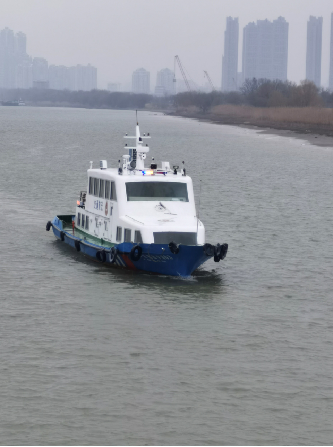
Model Innovation: The "car-ship linkage" shared economy model has been introduced, allowing tourists to rent small electric boats via a QR code, achieving seamless integration of "water-land green travel."
A more profound impact lies in the fact that the popularization of electric cargo ships is forcing the shipping industry to reconstruct its business model. Nanjing Langjing Cultural Tourism Group, through the analysis of vessel dynamic data, is adding cultural and creative stores and unmanned restaurants at high-frequency docking points, transforming "shipping flow" into "consumption growth." This integration of "transportation + services" has upgraded electric cargo ships from simple transportation tools to mobile commercial complexes.
IV. Future Vision: When the "China Solution" Sails Globally
From the Yangtze River to the Beijing-Hangzhou Grand Canal, from inland rivers to nearshore waters, Jiangsu Ship Union’s electric cargo ship technology has formed a replicable "China model." In 2023, the world’s first 700-TEU electric container ship was named in Jiangsu, with battery capacity, cargo capacity, and other indicators ranking first globally. By 2025, larger-tonnage electric bulk carriers and electric ro-ro ships will be launched. These "green ambassadors" will not only serve China’s "dual carbon" goals but will also sail along the "Belt and Road" routes, contributing Jiangsu’s wisdom to global shipping emissions reduction.
From the launch of the first 1,000-ton electric cargo ship to the creation of a green shipping system covering the entire industrial chain, Jiangsu Ship Union has demonstrated a truth through a decade of perseverance: environmental protection and economic growth can win together, and traditional industries and innovative technologies can coexist. As more and more electric cargo ships cut through the morning mist of the Yangtze River, they carry not only cargo but also the province and the nation’s commitment and responsibility to a green future. This giant ship heading toward zero carbon is leading the global shipping industry toward a new era of sustainable development at "Jiangsu speed."

Contact Us
Email:
13813981680@139.com
Tel:
+86-17602544555
Address:
Building T1, Tianjijiang Lai-T1, Pukou District, Nanjing City